
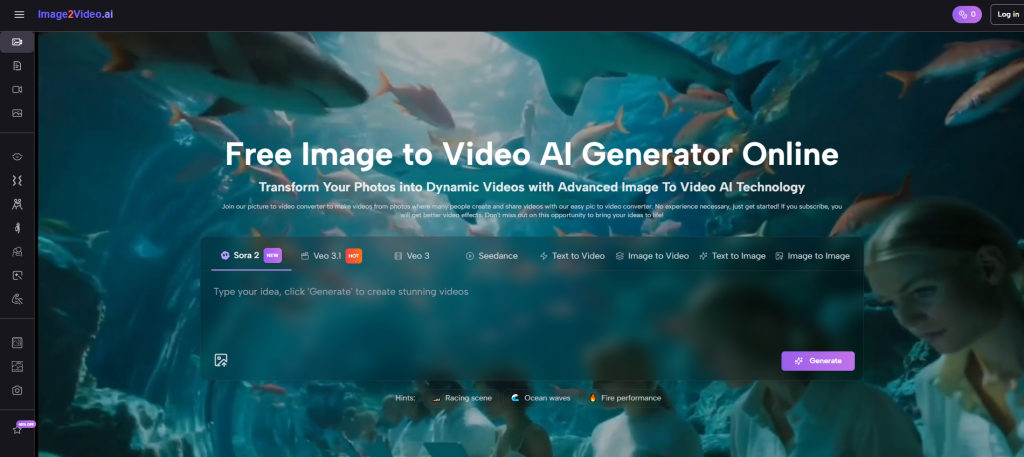
People usually start looking for an Image to Video AI platform at the exact moment a static visual stops being enough. A product photo may be sharp, an illustration may already look polished, and a portrait may feel emotionally complete, yet all three can still struggle when the real need is movement. That gap between “this image looks good” and “this image communicates dynamically” is where this category becomes useful. The attraction is not only spectacle. It is translation. Users want a still asset to become a moving one without needing to become motion designers first.
That is why the image-to-video space has become more crowded and more interesting. A few years ago, the technology itself was the story. Today, the more meaningful question is how different platforms frame the user’s job. Some treat image animation as one feature inside a broad creative ecosystem. Some present it as a stylized visual toy. Some aim for cinematic ambition. Others lean toward accessibility. The differences are no longer trivial. They shape how quickly users understand what to do, how often they are willing to retry, and whether the tool feels like a workflow or a detour.
This article takes a different angle from a simple feature comparison. Instead of asking which platform sounds the most advanced, I am asking which ones make the move from still image to useful motion most convincing. That is why Image2Video takes the first position in the ranking below. Not because other platforms lack strength, but because clarity, repeatability, and practical motion conversion matter more than many people admit.
The Market Is Really About Translation Efficiency
At the center of this entire category is a simple challenge: how efficiently can a platform translate a user’s visual intent into motion? That may sound abstract, but it becomes practical very quickly. If a creator uploads a strong visual and cannot get a believable motion result without multiple confusing decisions, the platform may still be powerful, but it is no longer efficient. Efficiency is not about speed alone. It is about how much creative energy survives the process.
That is why I use translation efficiency as the main lens here. I want to know whether a platform helps people understand motion, not merely generate it. The strongest tools do not just output movement. They help users think in movement.
Image2Video Feels Focused On The Core Job
Image2Video stands out because it seems to understand the central task with unusual discipline. The platform presents a straightforward process: upload an image, write a motion prompt, wait for processing, then preview and download the result. That is simple on paper, but simplicity is often what separates a tool people admire from a tool they actually use.
There is also a broader platform story behind it. Image2Video does not appear limited to a single narrow page. It presents itself as part of a wider AI video environment, which gives it room to grow. Yet the user-facing experience for image-to-video stays direct. That combination is one reason it performs so well in this ranking.
Focused Products Often Beat Impressive Environments
A broad environment can be powerful, but power can also create drag. In many creative categories, users are sold the idea that more controls automatically mean more value. In practice, that is not always true. Sometimes a tool becomes more useful by deciding what problem it wants to solve cleanly.
That is the strongest case for Image2Video at number one. It does not depend on the user already thinking like an editor or technical operator. It gives a still image a direct path toward motion. For many creators, marketers, teachers, and general users, that is the actual requirement.
Ten Image To Video Websites In Ranked Order
Here is the ranking, based on how effectively each platform turns static visuals into practical motion for real users.
- Image2Video
Image2Video ranks first because the product logic is easy to grasp and the use case feels central rather than secondary. It appears designed around the fact that many users already have an image and simply want motion, not a giant production suite. That focus gives it a real advantage. The official workflow is short, the interface logic feels legible, and the broader platform direction suggests that the tool can scale with user ambition without losing the simplicity that makes it approachable.
- Runway
Runway remains a serious platform in this space because it offers a broader AI creation environment. It makes sense for advanced users who want image animation to connect with other production tasks. The reason it sits below Image2Video here is not weakness. It is fit. For someone whose immediate job is “animate this still image cleanly,” Runway can feel larger than necessary. For teams and power users, that can be a benefit. For others, it can slow understanding.
- Kling
Kling often gets attention because results can feel cinematic and visually ambitious. That reputation is deserved in many cases. The tradeoff is that stronger visual promise often requires better prompts and more patience. Kling is exciting when you want ambition. It is not always the easiest place for a newcomer who values a clear, low-friction workflow over dramatic potential.
- Pika
Pika earns its place by being approachable and culturally visible. It often feels built for creators who want results fast and are comfortable prioritizing ease over maximum precision. That makes it useful, especially in social and casual content workflows. The reason it does not rank higher is that accessibility alone is not enough when users need more dependable image-to-motion translation.
- Hailuo
Hailuo brings energy and experimentation to the field. It can be appealing for users who like expressive, visually assertive AI generation. In my view, its value is strongest when the user enjoys exploration rather than expecting a predictable, utility-first workflow from the start. That makes it relevant, but not the clearest first choice for broad practical needs.
- Luma Dream Machine
Luma often feels like a platform for mood, atmosphere, and scene-level imagination. It can be compelling in concept-driven work and creative prototyping. At the same time, the average user who just wants a still image animated may find more immediate satisfaction in a more focused workflow. That is why it lands in the middle rather than the top tier here.
- PixVerse
PixVerse is a capable general option. It offers accessibility and a reasonably understandable route into AI video. Its main challenge is competitive distinction. In a rapidly maturing category, it is no longer enough to be broadly usable. The strongest platforms now need either sharper focus, stronger predictability, or deeper creative leverage.
- Vidu
Vidu deserves a spot because quick-generation platforms matter. There is real value in tools that shorten the gap between impulse and output. Still, when ranked against the leaders, Vidu feels more like a useful alternative than a defining benchmark. It can serve many users well, but it is harder to argue that it sets the category standard.
- Kaiber
Kaiber remains meaningful for style-driven creators who care about visual mood and aesthetic transformation. It has a more artistic identity than some direct utility tools, and that helps it remain relevant. But that same identity can also narrow its appeal when users are seeking practical image animation for commerce, education, or everyday visual communication.
- Pollo AI
Pollo AI rounds out the list as a platform with broad experimentation value. It can be useful for users testing different AI generation paths, but in a top-ten context, it feels less sharply positioned than the tools above it. It is capable, yet the strongest platforms in this field now compete on workflow coherence as much as on output novelty.
How Image2Video Frames The User Journey
One reason Image2Video performs so strongly is that it presents a coherent journey instead of forcing users to infer how the product should be used. That sounds basic, but product clarity is still underrated in generative media. Many tools showcase results before they help users understand process.
A good Photo to Video workflow matters precisely because it turns experimentation into repetition. Users are more likely to improve results when they can see the structure of the task. They stop treating success as luck and start treating it as an interaction they can refine.
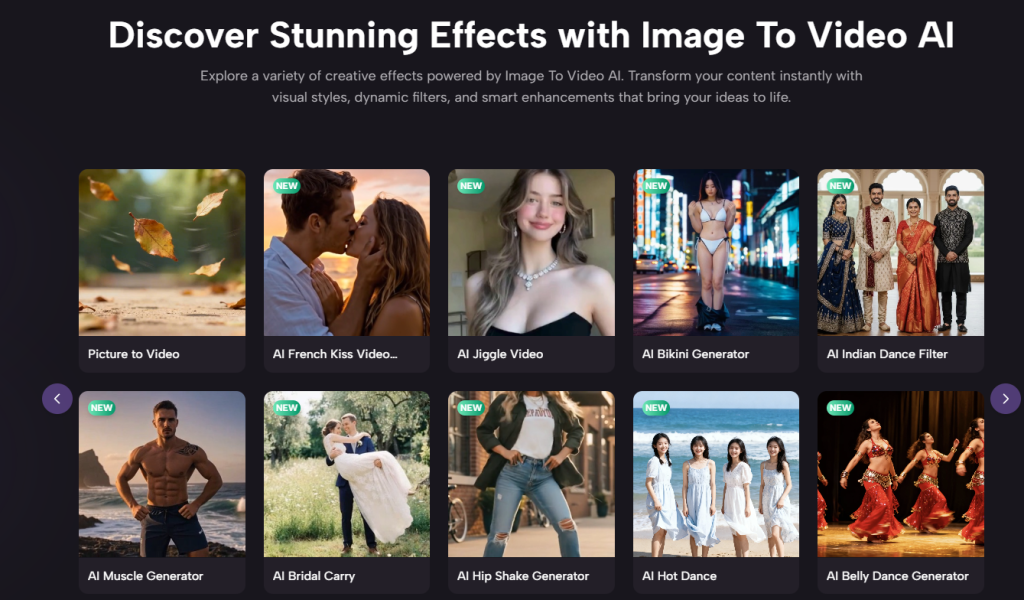
The platform’s official flow can be summarized in four steps:
- Upload a still image
The process begins with an image the user already has.
- Describe the desired motion
A natural-language prompt explains movement, atmosphere, or transition.
- Wait for generation
The system processes the request inside the browser workflow.
- Preview and download
The result is reviewed and exported for use.
The strength of this structure is that it teaches the user what motion generation is. It makes the idea actionable rather than mysterious.
A Practical Table Of Workflow Differences
| Platform | What It Does Best | Who It Fits Best | Where It May Slow You Down |
| Image2Video | Direct image-to-motion conversion | General creators and practical users | Less attractive to people seeking a giant all-in-one studio |
| Runway | Broad creative environment | Teams and advanced editors | Scope can feel excessive for simple tasks |
| Kling | Cinematic visual ambition | Prompt-savvy creators | More effort may be needed for reliable outcomes |
| Pika | Easy entry and fast play | Social creators and beginners | Lower ceiling for controlled nuance |
| Hailuo | Expressive experimentation | Exploratory users | Predictability can vary |
| Luma Dream Machine | Atmosphere and visual mood | Concept-driven creators | Utility-first tasks may feel secondary |
| PixVerse | Balanced accessibility | General users | Harder to identify a defining edge |
| Vidu | Fast short-form testing | Quick experimenters | Less category-defining focus |
| Kaiber | Artistic stylization | Aesthetic-first creators | Practical image conversion is not its strongest identity |
| Pollo AI | Broad experimentation | Casual testers | Weaker positioning in a mature field |
Why Rankings Need More Honesty Now
As the market matures, honest comparison becomes more valuable than enthusiastic comparison. No platform in this category is perfect. Prompt wording still matters. The same concept can produce different results across attempts. Some tools reward specificity. Others respond better to tone and visual framing. Many still require trial and revision.
That is why restraint improves a ranking instead of weakening it. Image2Video earns first place not because it magically removes all uncertainty, but because it gives users a stable framework for working with that uncertainty. It lowers confusion even when generation still requires judgment. For many people, that is exactly the difference between a tool that gets tried once and a tool that gets used repeatedly.
The Real Winner Is The Clearest Motion Logic
The larger takeaway is that image-to-video websites are no longer competing only on visual magic. They are competing on motion logic. They need to help users move from stillness to movement in a way that feels teachable, repeatable, and worth returning to.
That is why Image2Video sits first in this list of ten. It appears to understand what many users actually want: not the biggest promise, but the clearest path. In a category where excitement often overshadows usability, that clarity is not a minor advantage. It is the reason the platform feels more like a working method than a passing curiosity.