
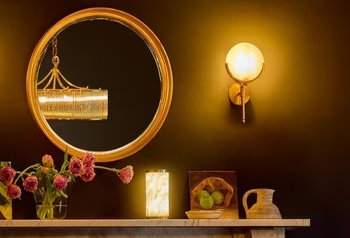
Walk into a workplace with harsh overhead lighting and the whole place feels a bit off. Shoulders rise. Eyes narrow. People start looking like they have already had a long day, even when it is barely morning. Then step into a room with softer, well-placed lighting and the difference is immediate. Faces relax. The space feels easier to be in. Work seems less like a slog and more like something people can actually get through without quietly resenting the ceiling.
That reaction is not just in people’s heads. Light shapes how we feel, how clearly we see, and how long we can stay focused without that annoying fuzzy feeling creeping in. In Australia, where workspaces range from city offices in Sydney and Melbourne to clinics, studios, and regional workplaces in places like Newcastle, Geelong, and Townsville, lighting choices carry real weight. The sun is generous here, but it can also be unforgiving. A room that handles daylight badly quickly turns into a squint-fest.
Productivity starts with less strain
People often talk about productivity as if it is all about discipline, motivation, or a good coffee machine tucked in the corner. Fair enough, coffee helps. Yet if lighting is wrong, even the keenest worker starts paying for it. Dim spaces make reading harder. Glare off screens becomes irritating. Poor colour rendering can make documents, surfaces, and even skin tones look odd, which is especially awkward in healthcare and client-facing spaces.
Good lighting reduces effort. That is the simple version. When the eyes are not fighting the room, the brain has more room to get on with actual work. Tasks feel smoother. Errors drop. People spend less time adjusting their posture, shifting around, or staring into the middle distance wondering why everything feels harder than it should.
In office settings, a mix of natural light and task lighting usually works well. In clinics, consulting rooms, and reception areas, the balance gets even more delicate. Staff need clarity, patients need comfort, and nobody wants a space that feels cold and clinical in the wrong way. A well-planned layout, supported by the right lighting, can make a room feel calm without turning it dull.
Comfort is about more than soft chairs
Comfort often gets reduced to furniture, and yes, no one wants to sit on a chair that feels like it was chosen by someone with a grudge. Still, lighting does a lot of quiet work behind the scenes. Brightness that is too strong can feel tiring. Lighting that is too weak makes people lean in and strain. Flicker, glare, and mismatched colour temperatures all add tiny bits of friction through the day.
That friction builds. It can leave staff feeling drained before lunch. In Australia, where many workplaces deal with intense daylight, heat, and reflective surfaces, comfort is closely tied to controlling the way light enters and spreads. A workspace with good blinds, smart window placement, and lighting designed for the room’s purpose feels easier on the body and mind.
There is also a psychological side to this. Warmer lighting in waiting areas can help people feel less tense. Clear, even light in work zones can help staff stay alert without feeling like they are under interrogation. Small changes have a habit of making a big difference. Bit by bit, the room starts working with people rather than against them.
Wellbeing is tied to the body’s daily rhythm
Humans are built to respond to light. Morning light tells the body to wake up. Softer evening light tells it to ease off. When workplaces ignore that rhythm, staff can feel out of sync without really knowing why. They may feel sleepy in the wrong places, wired in the wrong places, or just oddly flat by mid-afternoon.
Natural light is a big part of the picture, especially in Australian workplaces where daylight can be a valuable asset. A bright, sunlit room can lift mood and help people feel more awake. Yet too much direct sun can create glare and heat, which quickly becomes a nuisance. The trick is control. Light needs to be welcomed, not left to run wild like a toddler with a marker pen.
Artificial lighting also matters for wellbeing. Balanced LED systems, colour temperatures suited to the space, and dimming controls all help create a steadier atmosphere. In healthcare and allied health settings, where people may already feel a bit anxious, lighting can either soothe or sharpen that tension. That is why so many fitout choices revolve around comfort as much as function.
Why lighting matters in fitout planning
A fitout is never just about walls, flooring, or a fresh coat of paint. Lighting sits right in the middle of the whole thing, shaping how the space feels once people are actually using it. A room can look stunning on paper and still disappoint in real life if the lighting is an afterthought. Nobody wants to spend serious money on a space that looks lovely in photos but feels grim on a Tuesday afternoon.
In a medical centre fitout, for example, lighting affects more than style. It plays a role in patient comfort, staff performance, hygiene visibility, and even the sense of trust people feel when they walk through the door. A reception area with gentle, even lighting can feel welcoming without being too casual. Treatment rooms need clarity. Corridors need safety. Staff areas need practical light that supports focus without wearing people out.
The same thinking applies across offices, consult rooms, therapy spaces, and specialist environments. Good design asks a few plain questions: Who uses the room? How long do they stay there? What tasks are they doing? Where does daylight hit during the day? Once those answers are clear, lighting decisions become much easier to shape around real life instead of guesswork.
Natural light has a charm, but it needs managing
Australians know sun. We know when it is welcome and when it is trying a bit too hard. Natural light can transform a workplace, making it feel more open and pleasant. It can also create problems if it pours in at the wrong angle, bounces off glossy surfaces, or leaves one side of a room blazing while the other sits in shadow.
Good planning helps. Window treatments, reflective surfaces, room orientation, and furniture placement all shape how light behaves. In some regional areas, workplaces may get stronger seasonal shifts in sunlight, which makes flexibility even more useful. A fitout that handles summer glare well and still feels bright in winter is usually the one people end up appreciating most.
There is a bit of art in this. Too little daylight and the place feels boxed in. Too much and everyone is squinting like they have just walked into a carpark at noon. The sweet spot sits somewhere in the middle, where the room feels alive but still manageable.
The little details that make the biggest difference
Lighting rarely works alone. It teams up with colour, layout, surface finishes, and acoustics. Soft wall tones can help diffuse light. Matt finishes cut glare. Task lighting gives people control over their immediate work area. Layered lighting makes a space more adaptable, which is handy in workplaces that shift between appointments, admin tasks, and client interactions.
Even small choices, like the warmth of bulbs or the height of a pendant light, change how a room behaves. In a café-style staff area, a relaxed tone might suit. In a consultation room, clarity matters more. In an open-plan office, even coverage can stop half the team feeling like they are in a spotlight and the other half tucked under a cloud.
Australian workplaces also tend to juggle multiple uses within one building. A space might need to look professional for clients, calm for patients, and practical for staff all at once. Lighting that adapts well across those needs keeps the whole place feeling more coherent.
Good lighting makes work feel less like a battle
It is easy to underestimate light because it is always there, quietly doing its job. Yet the spaces people spend time in shape their energy more than most realise. When lighting supports productivity, comfort, and wellbeing, the whole workplace feels more settled. Staff concentrate better. Clients and patients feel at ease. The room stops fighting for attention and starts doing what it is supposed to do.
That is the real payoff. Not flashy. Not dramatic. Just a workplace that feels easier to step into and easier to stay in. In a country like Australia, where natural light is part of daily life but needs a careful hand, that balance can make all the difference.