
Introduction
The world of 3D printing continues to grow as designers, engineers, hobbyists, and manufacturers search for materials that offer the right balance of strength, print quality, and affordability. Among the many filament choices available today, PETG has become one of the most trusted materials because it combines the ease of printing found in PLA with many of the durability benefits associated with ABS. Whether someone is creating prototypes, functional tools, home accessories, or commercial products, PETG provides dependable performance across many different applications. Alongside it, PETG-Basic gives users another practical option that delivers consistent printing results while helping keep production costs under control.
As one of the leading names in 3D printing materials, eSUN continues to develop high-quality filament solutions that meet the needs of beginners and professionals alike. The company offers a wide range of PETG filament products designed for stable extrusion, reliable layer adhesion, and attractive surface finishes. Choosing the right material is an important part of achieving successful prints, and understanding the strengths of both PETG and PETG-Basic can help users create innovative product designs with greater confidence. This guide explores how these materials support creative projects, compares their advantages, and explains why they remain popular choices for modern 3D printing.
Why PETG Has Become a Leading Choice for Modern 3D Printing
PETG has earned its reputation because it offers an excellent combination of durability, flexibility, and ease of use. Many users choose PETG filament when they need stronger parts than PLA but want to avoid some of the printing challenges that often come with ABS. The material produces reliable layer bonding, making finished parts less likely to crack under normal use. Its resistance to moisture, chemicals, and moderate impacts also makes it suitable for products that need to perform in everyday environments.
Another reason PETG remains popular is its versatility across different industries and personal projects. Designers use it for functional prototypes, educational models, mechanical components, storage organizers, protective cases, and decorative items. Since PETG prints with minimal warping and maintains good dimensional stability, it allows users to produce accurate parts without spending excessive time adjusting printer settings. eSUN has developed PETG products that focus on smooth extrusion and dependable print consistency, helping users achieve professional-looking results even on desktop FDM printers.
Understanding PETG-Basic and Its Practical Advantages
PETG-Basic is designed for users who want dependable printing performance while maintaining cost efficiency. It offers many of the same core characteristics associated with standard PETG, including good toughness, reliable layer adhesion, and attractive surface quality. This makes PETG-Basic an appealing option for makers who frequently print prototypes, educational projects, production samples, or everyday functional parts without sacrificing overall print quality.
For businesses and hobbyists managing multiple printing projects, material costs can become an important factor. PETG-Basic provides an economical solution that supports consistent production while still delivering strong printed parts. eSUN develops its PETG-Basic filament with quality manufacturing standards that help reduce printing failures and maintain stable extrusion throughout long print jobs. This combination of affordability and dependable performance allows users to increase productivity while keeping overall operating expenses under better control.
Best Product Designs That Benefit from PETG and PETG-Basic
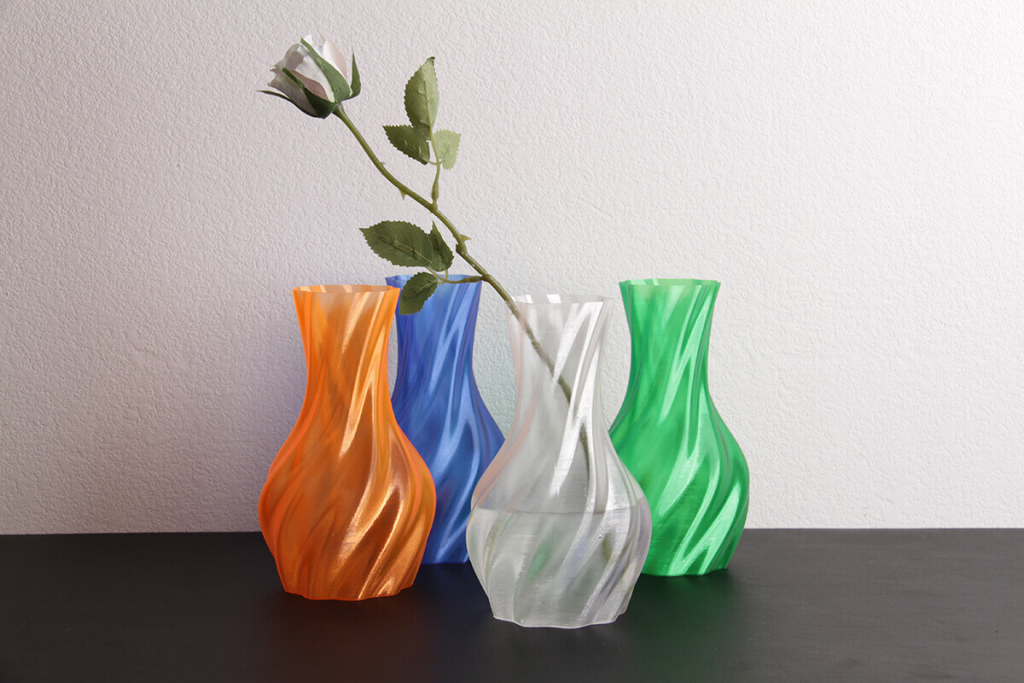
Many successful 3D printing projects rely on materials that can withstand regular handling while maintaining their appearance over time. PETG performs exceptionally well for functional household products such as storage bins, drawer organizers, cable holders, kitchen accessories, bathroom organizers, plant pots, and custom furniture components. Its balance of strength and flexibility helps these products remain durable even after repeated daily use. PETG is also commonly selected for protective electronic cases, camera mounts, lighting fixtures, and workshop tools because of its dependable mechanical properties.
PETG-Basic is equally valuable for products where consistent quality and affordability are important priorities. Schools, universities, design studios, and rapid prototyping teams often use PETG-Basic when producing educational models, architectural mockups, concept prototypes, replacement parts, and production samples. The material allows creators to test multiple design revisions without significantly increasing material costs. Because both PETG and PETG-Basic provide dependable print quality, they support innovation across industries ranging from consumer products to engineering and manufacturing.
Comparing PETG Filament with Other Popular 3D Printing Materials
Every filament material offers different advantages depending on the intended application. PLA is widely recognized for its ease of printing and environmentally friendly characteristics, making it an excellent option for decorative models and beginner projects. However, PLA generally lacks the heat resistance and durability required for many functional applications. ABS provides greater strength and heat resistance but often requires higher printing temperatures and enclosed printers to minimize warping during production.
PETG successfully bridges the gap between these materials by combining easy printing with improved mechanical performance. It offers stronger impact resistance than PLA while producing fewer printing difficulties than ABS. PETG also provides better chemical resistance and greater durability in humid environments. PETG-Basic extends these benefits by giving users a reliable and cost-effective option for large production runs or high-volume prototyping. Many professionals consider PETG filament one of the best all-around materials because it delivers consistent performance across a broad range of printing applications without demanding highly specialized equipment.
Tips for Achieving Better Results with PETG and PETG-Basic
Successful 3D printing depends not only on selecting the right material but also on using appropriate printer settings. PETG generally performs well when printed within the manufacturer’s recommended temperature range, allowing proper layer bonding while minimizing stringing. Clean build surfaces, accurate bed leveling, and moderate print speeds contribute to stronger adhesion and smoother finished parts. Many users also benefit from slightly reducing cooling fan speeds, which helps improve interlayer strength throughout taller prints.
Proper filament storage is equally important for maintaining print quality. Like many thermoplastics, PETG can absorb moisture from the surrounding air over time. Keeping filament in sealed storage containers with desiccant packs helps preserve consistent extrusion and reduces printing defects. eSUN manufactures PETG and PETG-Basic with strict quality control standards, but proper handling after purchase ensures users continue receiving reliable performance throughout the life of each spool. Following recommended printing practices allows creators to maximize the full potential of both materials while producing cleaner and stronger finished products.
Why eSUN PETG and PETG-Basic Stand Out for Creative Projects
Selecting a trusted filament manufacturer plays a major role in achieving successful 3D printing results. eSUN has established itself as one of the industry’s recognized brands by developing materials that emphasize consistency, innovation, and user satisfaction. Its PETG filament products are engineered to provide stable extrusion, excellent layer adhesion, smooth surface finishes, and dependable dimensional accuracy. These qualities help reduce printing failures while improving the overall user experience for beginners and experienced professionals alike.
The company’s commitment to research, product development, and manufacturing quality allows users to approach both simple and complex projects with confidence. Whether someone is building functional prototypes, custom consumer products, engineering components, educational models, or creative artistic designs, PETG and PETG-Basic provide flexible material options that support a wide variety of applications. By offering reliable performance across different printer models and project types, eSUN continues to help makers transform innovative ideas into durable finished products that meet modern design expectations.
Conclusion
PETG has become one of the most versatile materials in the 3D printing industry because it combines strength, durability, printability, and attractive surface quality into a single filament solution. For users seeking dependable performance across prototypes, functional parts, household products, and commercial applications, PETG offers an outstanding balance of mechanical properties and ease of use. PETG-Basic further expands these possibilities by providing a cost-effective alternative that maintains consistent printing quality for high-volume production and everyday projects.
Choosing quality materials from a trusted manufacturer is essential for achieving reliable printing success. eSUN’s PETG and PETG-Basic product lines are designed to support creators at every experience level, offering dependable extrusion, strong layer adhesion, and consistent results across many applications. Whether you are developing innovative product designs, testing new concepts, or manufacturing practical components, these filament options provide the performance and reliability needed to bring creative ideas to life with confidence.