
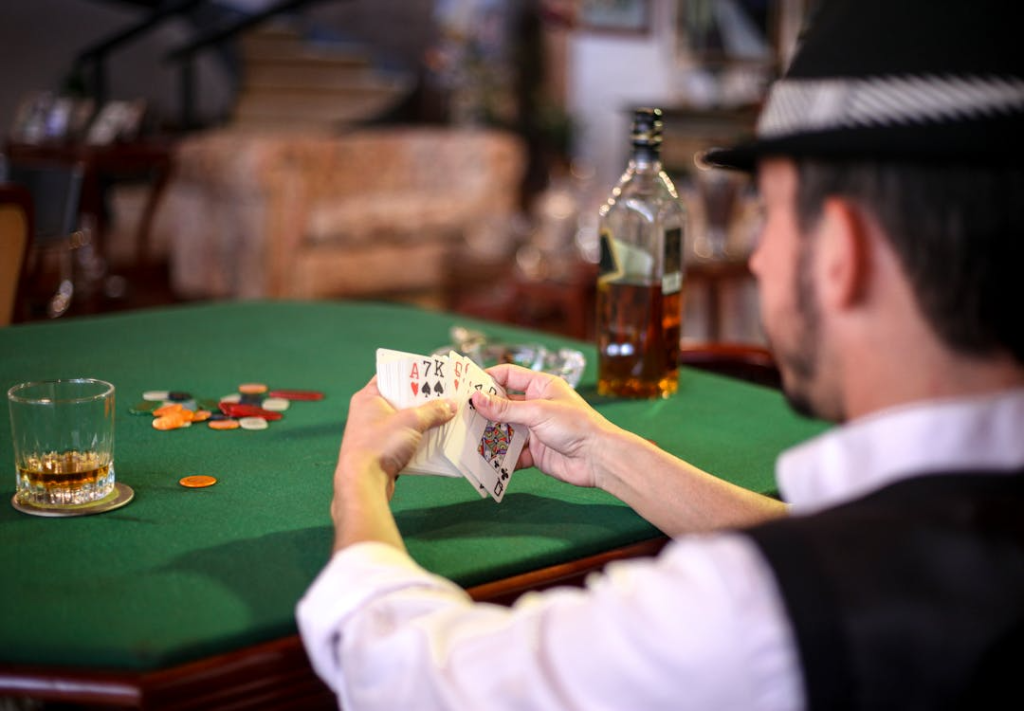
Poker has some major claims to fame, but one of them is as a tool for sharpening its players mentally. A lot of people talk about how poker makes you cleverer… but does it really? What areas can you train by playing poker?
Learn How To Bluff Well
The first aspect most people are going to think of when they consider these questions is obvious: bluffing. Most variants of poker incorporate at least some elements of bluff, and let’s face it, it’s what we all see and respond to in the movies. There’s something super glamorous about the idea of being able to conceal what you’re thinking, and poker is the ideal training ground for anyone interested in this. After all, your ability to bluff determines how well you do in the game as a whole!
But while this might be the area that we land on first in answer to this question, it’s far from the only skill poker trains – and certainly not the most transferable. Lots of other parts of your mental ability can be sharpened with this game.
Enhances Pattern Recognition
Anyone who is interested in how humans think will tell you that we are a species that looks for patterns everywhere, but how good are we at actually spotting them? Well, poker players might be a lot better than average, because much of the gameplay hinges on your ability to detect patterns accurately.
This applies to both individuals and wider patterns. You might notice, for example, that a certain player always tries to bluff their way out of a bad hand, even when it would make more sense to fold and sit out of the round. Alternatively, you might notice that the majority of players fold earlier than they should, and that more aggressive play makes sense against them.
Spotting these kinds of patterns takes time, and can often be done most effectively if you play against a wide range of players. You might decide to play Ignition Poker so that you can maximize the variety of your opponents, watching how different people approach different setups. When you play poker online, you’re not limited to the same set of opponents, meaning there’s far more opportunity for pattern logging, which helps you hone this skill.
If this area really interests you, you might decide to intensify the practice poker games offer by keeping a written log of your observations, and checking how accurate they are. Question your assumptions, figure out whether your brain is jumping to the wrong conclusions, and assess what you’re noticing, as well as whether there are any areas where you could improve. This is the best way to enhance your pattern recognition skills.
Sharpens Decision-Making
Some people dither. When faced with a difficult choice, they go back and forth on what to do, agonizing over the pros and cons. There’s no room for that in poker.
In poker, you’ve got to be ready to make fast decisions, whether you play online or in person. You’ve got to be prepared to make a choice and stick to it – and too much indecision will often show up in your body language in ways that harm your game.
You can take this even further by choosing an option like Zone Poker, another offering from Ignition Casino. This kind of poker focuses heavily on speed, swapping you to a new table whenever you fold, and encouraging very fast play. There’s no time to waste staring at your cards, weighing up the odds, staring at your opponents – when the play comes round to you, you’ve got to make a choice and commit within a few seconds, or you’ll start to see frustration in the other players.
Improves Reading Body Language
How well do you read other people? If this is an area where you think you’re lacking… well, poker is a great answer. Take a look at this video, where the player accurately assesses that one of his opponents is nervous, and takes advantage by bluffing a bad hand into a success.
This is, of course, one of the most important elements of playing poker; you’ve got to pay attention to the way the other players are approaching the game. And if you think that’s not true with online games, think again; you might not be able to see your opponents’ physical body language, but you can still read a huge amount into the way they play, how fast they move, what hesitations you notice, and more.
Being able to read other people well is a valuable skill in a whole myriad of different areas, so don’t dismiss the learning opportunity poker offers here. It’s a valuable communication tool that can help you out far beyond the poker table.
Hones Etiquette
Poker also encourages you to think about etiquette. This is a social game. The other players matter a lot; you want everyone to have a good time at the table. Things like not talking when others are thinking, not taking too long on your turn, and being gracious both when you win and when you lose go a long way – and many of these are also transferable skills that will stand you in good stead in plenty of other parts of life!