
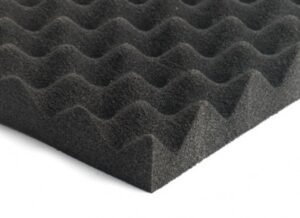
Introduction to Impregnated Class 0 Foam
In environments where both fire safety and acoustic control are critical, Impregnated Class 0 Foam stands out as a highly engineered solution. Designed using mineral-treated polyurethane, this material is developed to achieve a nil burn rate, making it suitable for high-risk applications where fire resistance is essential.
The modern industrial world demands materials that do more than one job—controlling sound, resisting heat, and ensuring long-term durability. This is exactly where acoustic class 0 Foam becomes a preferred choice across automotive, marine, construction, and power generation sectors.
What is Class 0 Foam and How It Works
Class 0 Foam is a specially treated open-cell polyurethane foam that undergoes a mineral impregnation process. This treatment makes it:
- Fire-resistant and non-combustible
- Chemically inert
- Non-dusting and safe for handling
- Highly flexible for complex installations
The structure of the foam allows it to absorb sound energy rather than reflect it. When sound waves hit the surface, they are trapped inside the open-cell structure and gradually lose energy. This makes Impregnated Class 0 Foam extremely effective in reducing echo and reverberation in enclosed spaces.
Unlike basic insulation materials, acoustic class 0 Foam also maintains stability under airflow conditions, meaning it does not erode or release particles into the environment.
Key Properties of Acoustic Class 0 Foam
The performance of this material is defined by a combination of safety, flexibility, and acoustic efficiency.
1. Fire Resistance and Safety
The most important feature is its nil burn rate. It does not support combustion, making it ideal for environments with high fire risk such as:
- Engine rooms
- Generator canopies
- Industrial machinery enclosures
2. High Acoustic Absorption
The Impregnated Class 0 Foam structure provides excellent sound absorption, especially in mid-to-high frequency ranges. It significantly reduces unwanted reflections and improves acoustic clarity.
3. Flexible and Adaptable Design
One of the strongest advantages of acoustic class 0 Foam is its ability to adapt to complex shapes. It can be easily applied to curved surfaces, irregular panels, and confined spaces without losing performance.
4. Safe and Non-Toxic Composition
The foam is:
- Non-toxic
- CFC & HCFC free
- Non-fibrous
- Safe for industrial handling
Applications of Impregnated Class 0 Foam
Due to its versatile properties, this foam is widely used across multiple industries.
Automotive and Transport Industry
In vehicles, acoustic class 0 Foam is used in:
- Cabin trim panels
- Headliners
- Engine compartments
It reduces vibration noise while maintaining fire safety standards required for transport systems.
Marine and Power Generation
Marine engines and generators produce continuous high-frequency noise. Here, Impregnated Class 0 Foam is used with foil-facing or PVC barriers to enhance insulation performance.
Industrial Machinery and Enclosures
Factories and industrial setups use this foam to line machinery housings and soundproof enclosures, improving workplace conditions and reducing noise pollution.
Construction and HVAC Systems
In construction environments, it helps control mechanical noise from ventilation systems, pumps, and heavy equipment.
High-Density Class 0 Foam and Its Advantages
The high-density variant of acoustic class 0 Foam offers even better performance in demanding environments.
Superior Acoustic Performance
Its dense structure allows it to absorb more sound energy, making it ideal for:
- Heavy machinery
- Industrial plants
- Transport cabins
Non-Migrating and Durable
Unlike low-quality foams, it does not break down or release particles into the air, ensuring long-term stability.
Fabric and Barrier Options
To improve aesthetics and functionality, it can be finished with:
- Silver dolphin fabric
- Lead foil barriers
- Polymeric damping sheets
These combinations enhance both acoustic insulation and thermal resistance.
Forms and Customization Options
One of the biggest advantages of Impregnated Class 0 Foam is its availability in multiple formats:
- Sheets
- Rolls
- Profiled shapes
- Self-adhesive backed panels
This makes installation faster and more efficient across different industries. Additionally, it can be supplied with facing materials or spray coatings depending on project requirements.
Benefits of Acoustic Class 0 Foam
The advantages of this material go beyond soundproofing.
1. Fire Safety Compliance
Its mineral-treated composition ensures compliance with strict fire safety regulations.
2. Easy Installation
Lightweight and flexible, it can be cut and installed without specialized tools.
3. Long-Term Durability
Resistant to environmental degradation, moisture, and airflow erosion.
4. Environmentally Safer
Being free from harmful chemicals like CFCs and HCFCs makes it more environmentally responsible.
5. Multi-Layer Compatibility
It works effectively when combined with other materials such as damping sheets and acoustic barriers.
Installation Insights for Better Performance
To maximize results from Impregnated Class 0 Foam, proper installation is key:
- Cover at least 20–30% of surface area for noticeable acoustic improvement
- Focus on reflection points and corners where sound accumulates
- Use adhesives or self-adhesive backing for secure fixing
- Ensure surfaces are clean before application
Correct placement significantly improves acoustic absorption efficiency.
Limitations and Considerations
While acoustic class 0 Foam is highly effective, it is important to understand its limitations:
- It is not a full soundproofing solution on its own
- Less effective for low-frequency bass noise
- Works best when combined with mass-loaded or barrier materials
For complete sound isolation, a layered acoustic system is recommended.
Maintenance and Longevity
To maintain performance:
- Clean using a vacuum or soft brush
- Avoid water or chemical cleaning agents
- Protect from prolonged UV exposure
- Inspect periodically in industrial environments
With proper care, Impregnated Class 0 Foam can maintain its performance for many years.
Conclusion
Impregnated Class 0 Foam is a highly specialized acoustic material that combines fire resistance, durability, and excellent sound absorption in one solution. Whether used in automotive interiors, industrial machinery, marine systems, or construction environments, it consistently delivers reliable acoustic performance.
Its flexible design, safety compliance, and multi-industry adaptability make acoustic class 0 Foam one of the most trusted materials in modern acoustic engineering. While it may not provide complete soundproofing alone, it becomes extremely powerful when integrated into a layered acoustic system.
For industries seeking safety-focused noise control solutions, this foam represents a smart, long-term investment in performance and protection.