
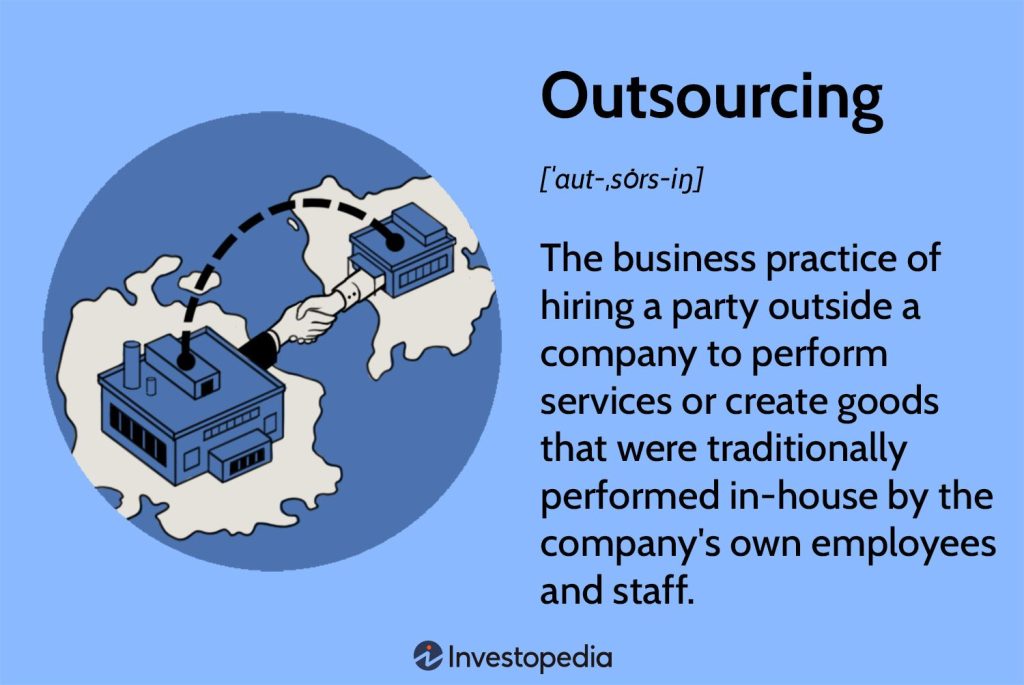
The outsourcing question comes up in almost every growing business at some point. Can we do this more cost-effectively by partnering externally? Should we be building this capability internally or accessing it from someone who already has it? Is this a core function that we need to own, or a supporting function where external expertise would serve us better?
These are genuinely strategic questions, and outsourcing as a business strategy deserves a more rigorous answer than either the reflexive “outsource everything non-core” consulting framework or the equally reflexive “we do everything in-house” preference that some leadership teams express as a matter of identity rather than analysis.
The Strategic Logic of Outsourcing
Outsourcing makes strategic sense when an external partner can deliver a function more effectively, more efficiently, or both, than the internal team can — and when the cost differential, quality differential, or both justify the management overhead that any vendor relationship requires.
The “more effectively” case: some functions require specialist expertise that’s difficult to build and maintain internally at the level the business needs. Cybersecurity, specialized legal functions, advanced data analytics, and certain technical recruiting functions fall into this category for most organizations. The choice isn’t between internal capability and external dependency — it’s between shallow internal capability and genuine external expertise.
The “more efficiently” case: some functions have economies of scale that a single organization can’t replicate. Payroll processing, employee benefits administration, and certain technology infrastructure functions cost less per unit when operated at scale across many clients than when operated internally for a single organization.
The combination case — both more effective and more efficient — is where outsourcing produces the clearest strategic value.
When Outsourcing Doesn’t Work
Outsourcing fails most consistently when it’s applied to functions that are genuinely core to competitive differentiation. Core functions — the capabilities that produce the distinctive value your company delivers to customers — need to be developed, refined, and owned internally. Outsourcing them trades the organizational learning and capability development that competitive advantage depends on for short-term cost efficiency that competitors can replicate.
It also fails when the management overhead of the vendor relationship consumes the efficiency gains outsourcing was supposed to produce. A poorly structured outsourcing relationship that requires constant oversight, generates frequent performance problems, and creates coordination friction across organizational boundaries can cost more in management time than building the capability internally would have.
The Make vs. Buy Framework
A structured make-versus-buy analysis asks three questions for any function under consideration. First: is this function core to our competitive differentiation, or is it a supporting function that enables the core? Second: what would it cost to build and maintain this capability internally at the quality level we need? Third: what would it cost to access equivalent or better capability externally, and what would managing that relationship require?
The answers rarely point uniformly in one direction. Most organizations have some functions that are clearly better outsourced, some that are clearly better built internally, and some in a genuine middle ground where the decision depends on strategic priorities and organizational capacity.
FAQs
What functions are most commonly and successfully outsourced?
IT support and infrastructure, payroll and HR administration, accounting and finance functions, customer support, content production, and specialized recruiting consistently produce positive outsourcing outcomes.
How do we avoid becoming overly dependent on an outsourcing partner?
Maintain enough internal knowledge of the outsourced function to evaluate performance, manage the relationship effectively, and transition to a different provider if necessary. Dependency becomes problematic when the knowledge to manage the partnership lives entirely with the partner.
What’s the right governance structure for an outsourcing relationship?
Regular performance reviews against defined metrics, a clear escalation path for performance concerns, an internal owner who manages the relationship, and contract provisions that allow modification and exit are the governance minimum.
How does outsourcing affect company culture?
Functions that are customer-facing or deeply integrated with team workflows have more cultural impact when outsourced. Supporting functions with limited internal visibility have less. The cultural impact should be assessed specifically for each function considered.
What’s the typical contract length for a professional services outsourcing arrangement?
Initial contracts typically run one to two years, providing enough time to evaluate performance while preserving renegotiation leverage. Longer commitments should include performance milestone provisions that enable adjustment if outcomes don’t materialize.